
Student vs artist-grade acrylics: worth upgrading?
A guide from Elysian Vibes, the art studio of Isha Kamal, to choosing acrylic paint when labels say student, studio, or professional.

What the grade is trying to tell you
Student-grade and artist-grade are useful starting labels, but they are not a universal performance ranking. A range may be designed for practice, while another is formulated for a higher pigment load or a broader colour offering. Read the maker’s information for the exact range rather than assuming every student paint behaves alike.
Winsor & Newton’s comparison of Professional Acrylic and Galeria gives a concrete example: it says both ranges use the same pigments in the colour it discusses, while Galeria has a lower pigment load. In the manufacturer’s equal-white tint demonstration, the Professional colour appears stronger. That is a product comparison from Winsor & Newton, not an independent test of every brand.
A sensible first purchase
For a beginner, student-grade paint can make practice less intimidating and leave more room in the budget for a useful brush, a sound surface, and enough paint to repeat an exercise. Choose colours you will actually use and learn how your particular tubes spread, cover, and mix. A lower price does not make a painting less valuable as practice; it simply means the formula and range need to meet your present purpose.
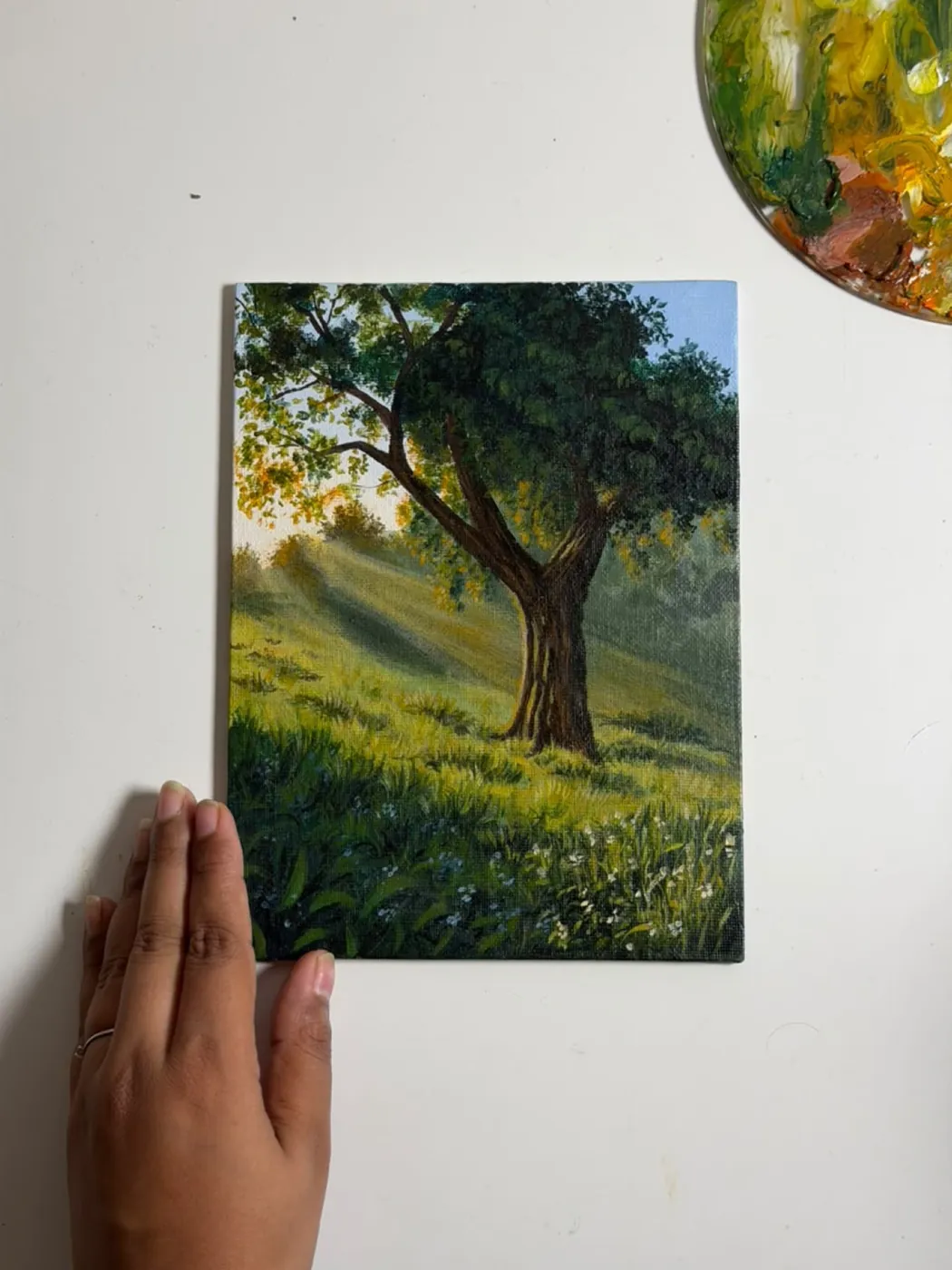
Artist-grade becomes easier to justify when you are mixing nuanced neutrals, relying on strong colour in thin layers, or keeping a finished piece for display. Higher pigment concentration may mean a mixture reaches the colour you want with less paint, but that does not remove the need for good colour choices or careful layering. Isha Kamal’s landscape portfolio shows why observation and decisions matter as much as the label on a tube; Elysian Vibes can help you build those fundamentals through a structured beginner course.
Explore the beginner acrylic course
Upgrade with a question in mind
Before replacing your whole palette, identify the problem. Do your light tints lose intensity? Are you using several layers to reach coverage? Is a colour difficult to mix because the available range is limited? Buy one or two artist-grade colours that address that problem and compare them on the same surface, with the same brush and similar paint amount. Label the swatches and let them dry before deciding.
There is no finish line where a student painter must upgrade. Start with paint that lets you practise consistently, then spend more when a confirmed difference supports the work you want to make.
References and next steps
For new paintings and studio updates, follow Elysian Vibes on Instagram .