
Water vs acrylic medium: how should you thin your paint?
A water-versus-medium guide in the Elysian Vibes journal, home to Isha Kamal’s art, with advice grounded in manufacturer testing.
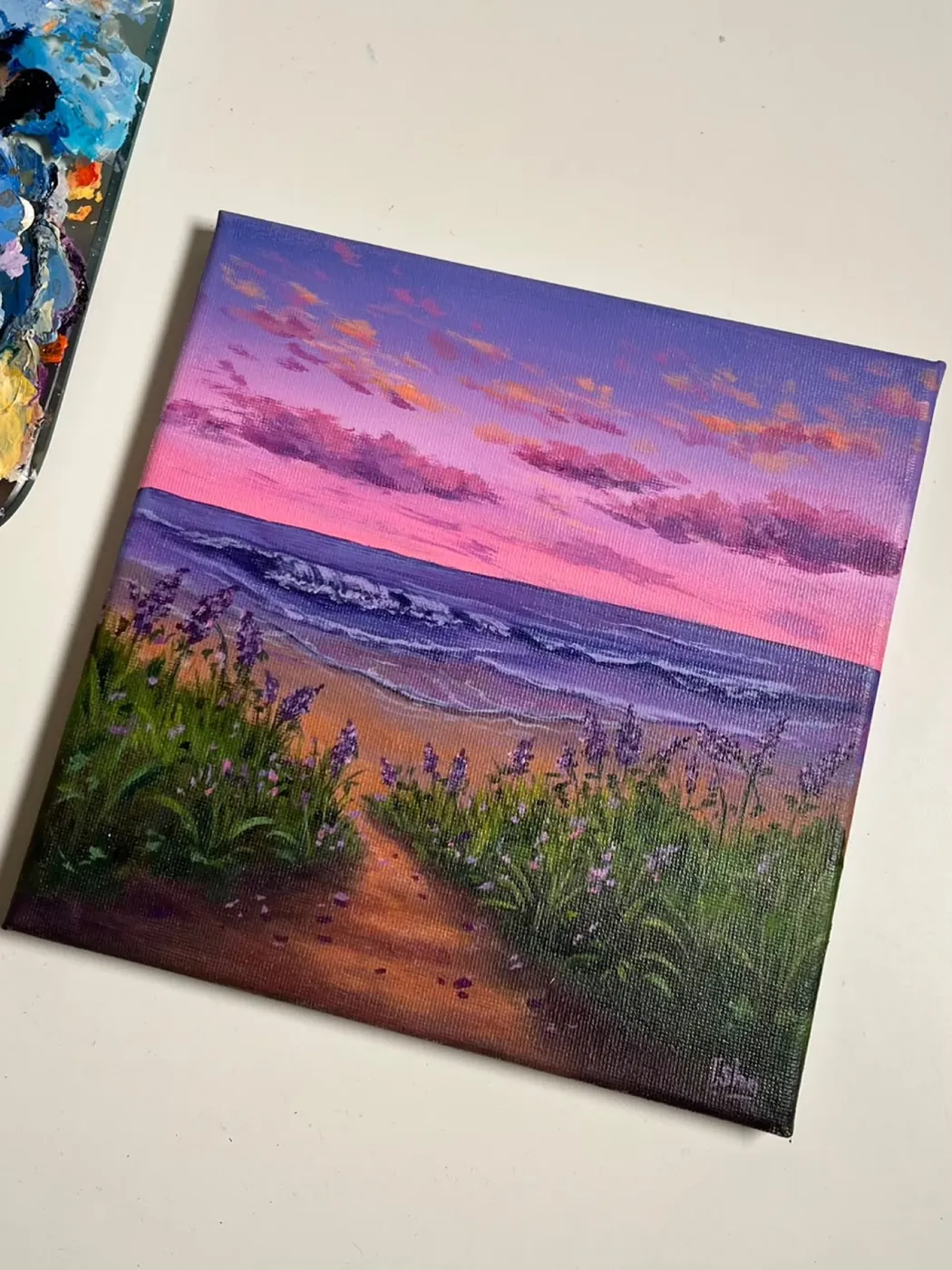
Start with the effect you need
Use water when you want acrylic to become looser and more wash-like. Use an acrylic medium when you want to change flow or transparency while retaining more of the product’s acrylic binder. The right choice depends on the paint line, pigment, surface, and how much handling the dry layer will receive; there is no reliable universal dilution ratio.
A watery mix can run on a vertical surface, puddle on a flat one, or buckle paper. It can also dry with a more matte appearance. Golden describes these changes in its water-dilution article and recommends testing an application rather than treating a single percentage as a rule.
What one manufacturer test actually shows
Golden tested its own Heavy Body, Fluid, High Flow, and OPEN acrylics on acrylic-gessoed wood and aluminium panels. Its results found no adhesion failure on that acrylic ground in the tested mixtures, while some pigments showed greater water sensitivity when highly diluted. A blend of acrylic medium and water reduced that sensitivity in the tested cases.
Those conditions matter. Golden says the results do not speak for other brands, and it did not test direct adhesion to every surface. A result on acrylic gesso is not permission to use the same mix on glass, glazed ceramic, plastic, or an unprepared surface. This is why a small labelled swatch is more useful than copying a ratio from a video.
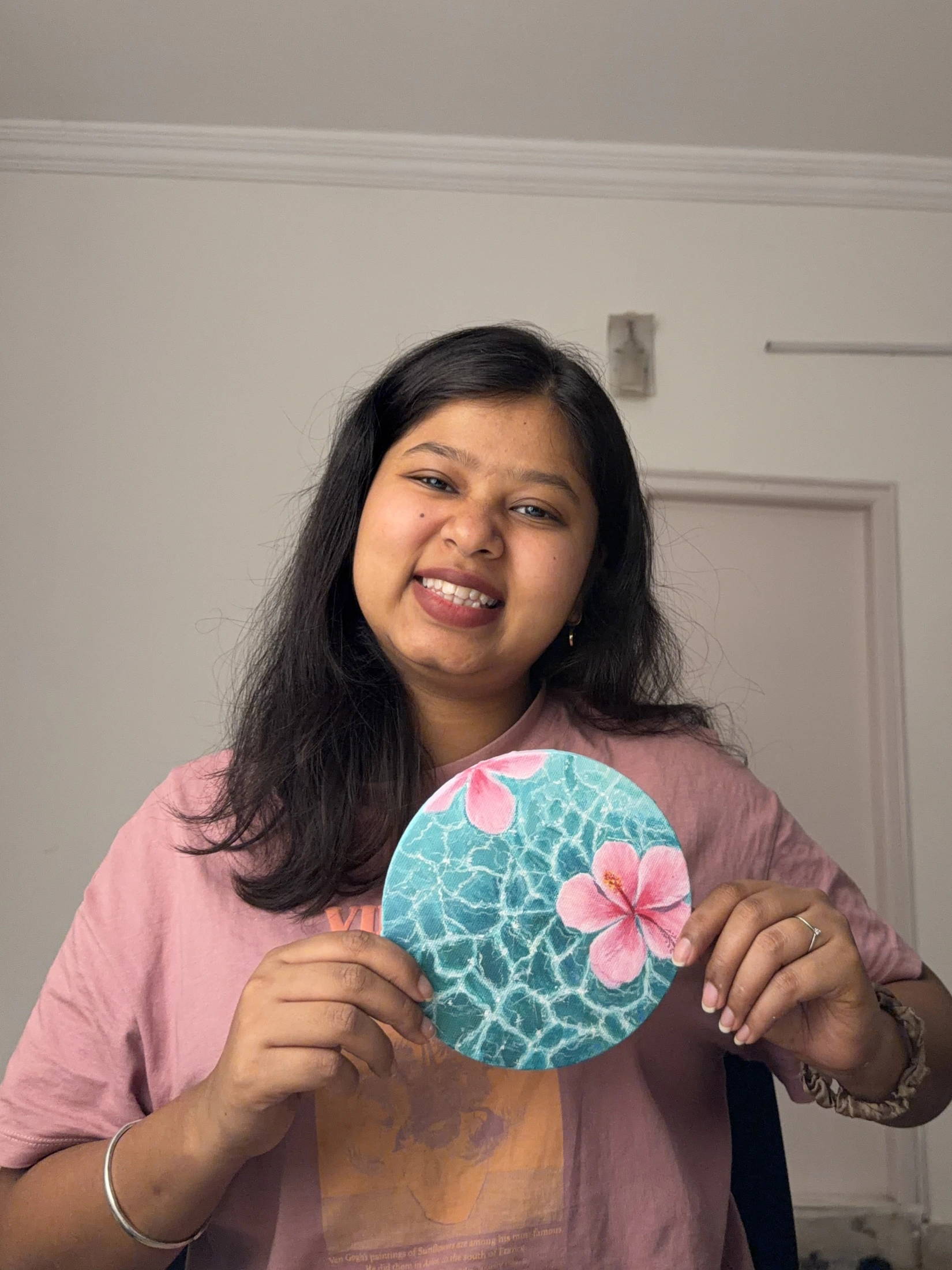
A low-risk beginner method
Make three small labelled swatches on the actual surface you plan to use: paint as it comes, paint loosened with a little water, and paint mixed with the manufacturer’s acrylic medium. Let each dry fully. Look for the qualities that matter to your project: edge control, transparency, sheen, layering, and whether a later brush pass disturbs the colour.
If you need a transparent glaze but the water mix feels fragile or too matte, test a medium. If you need a quick loose underpainting, water may be practical on a suitable absorbent ground. Keep the test specific to your paint and surface, and follow the product label. For colour inspiration alongside your material experiments, explore Isha Kamal’s paintings at Elysian Vibes. The beginner course introduces blending and layering if you would like a structured next step.
Explore Isha’s artworkBeginner acrylic courseChoosing acrylic paint grades
References and next steps
For new paintings and studio updates, follow Elysian Vibes on Instagram .