
Acrylic vs gouache: which paint suits your first projects?
A practical Elysian Vibes guide, alongside Isha Kamal’s art, to how acrylic and traditional gouache layer, rework and fit into an everyday setup.
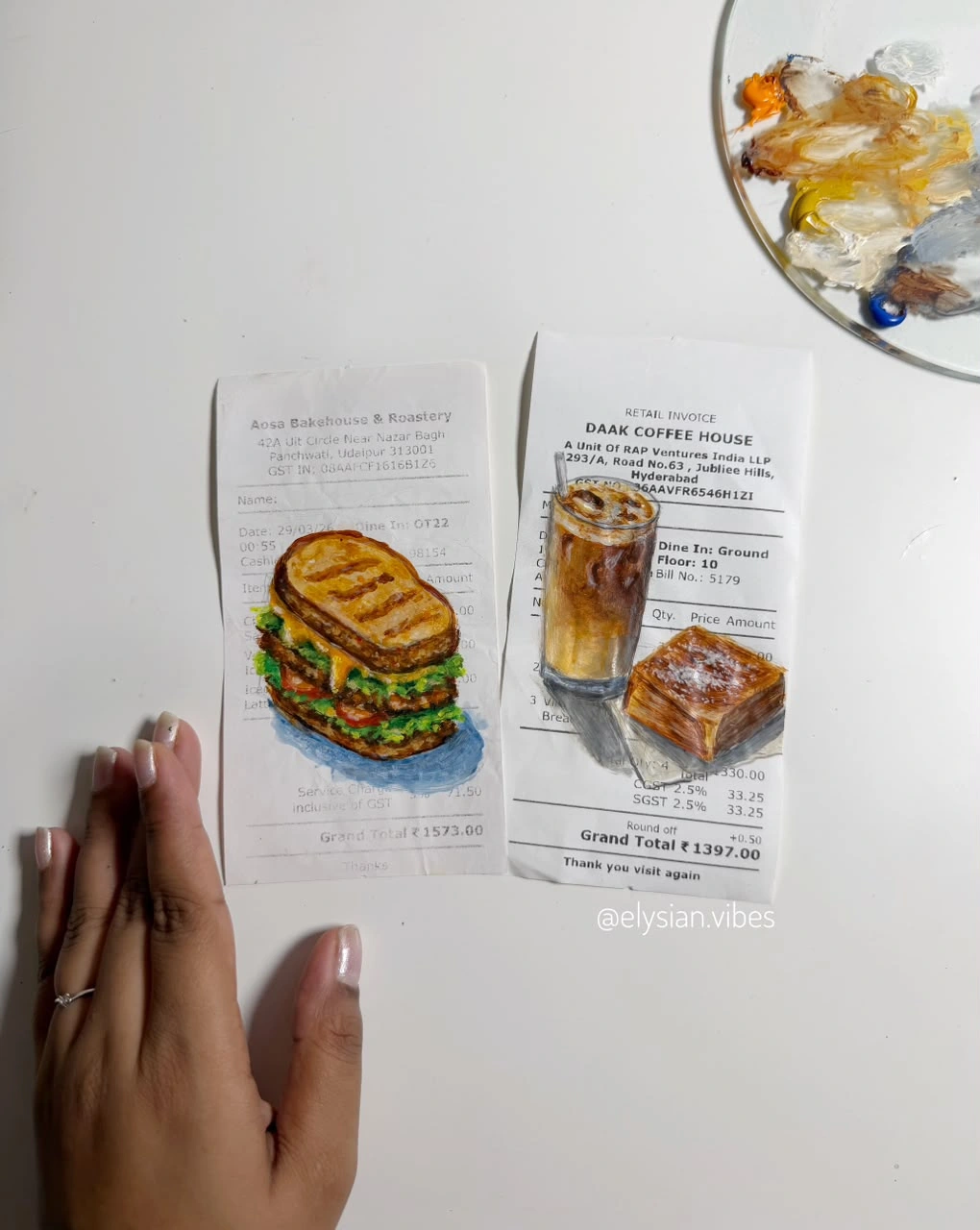
At a glance
| Consideration | Acrylic | Traditional gouache |
|---|---|---|
| After drying | Forms a water-resistant paint film | Can generally be reactivated with water |
| Typical finish | Varies by colour and medium | Flat, matt and opaque |
| Layering | Dry layers stay in place | Later wet layers may disturb earlier paint |
| A simple first setup | Paint, palette, brushes, water and a suitable surface | Paint, palette, brushes, water and suitable paper |
How the paints behave
Acrylic and gouache can both produce bold, opaque colour, but they do not behave the same way after they dry. Acrylic uses an acrylic binder and dries into a water-resistant film. That makes it practical for building one dry layer over another: the earlier layer is less likely to lift when a wet brush returns to the surface.
Traditional designers’ gouache uses gum arabic. Winsor & Newton describes it as an opaque watercolour with a matt, flat finish and high pigment load. Because dried gouache can be reactivated, an edge can be softened or a colour adjusted later, but a new wet layer may also disturb what sits beneath it. Acrylic gouache is a separate, acrylic-based product; its matt appearance does not give it traditional gouache’s rewetting behaviour.
Winsor & Newton: gouache and acrylic in watercolour techniques
Choose for the way you want to work
Acrylic is a useful starting point when you want to layer, paint on several kinds of prepared surface, or keep revising by covering a dry passage. Its drying speed rewards a simple rhythm: mix a manageable amount, work decisively, and clean brushes before paint dries in them. Mediums can change flow, transparency and texture later, but a beginner can start with paint and water while learning basic control.
Gouache may suit you when a compact paper-based practice, crisp shapes and a soft matt finish feel more appealing. Rewetting can make palette paint usable again and allows some adjustment on the page. It also asks for care with water: very thick traditional gouache layers can crack, while overly wet strokes may wake up earlier layers. Neither workflow is universally easier; each removes one difficulty and introduces another.
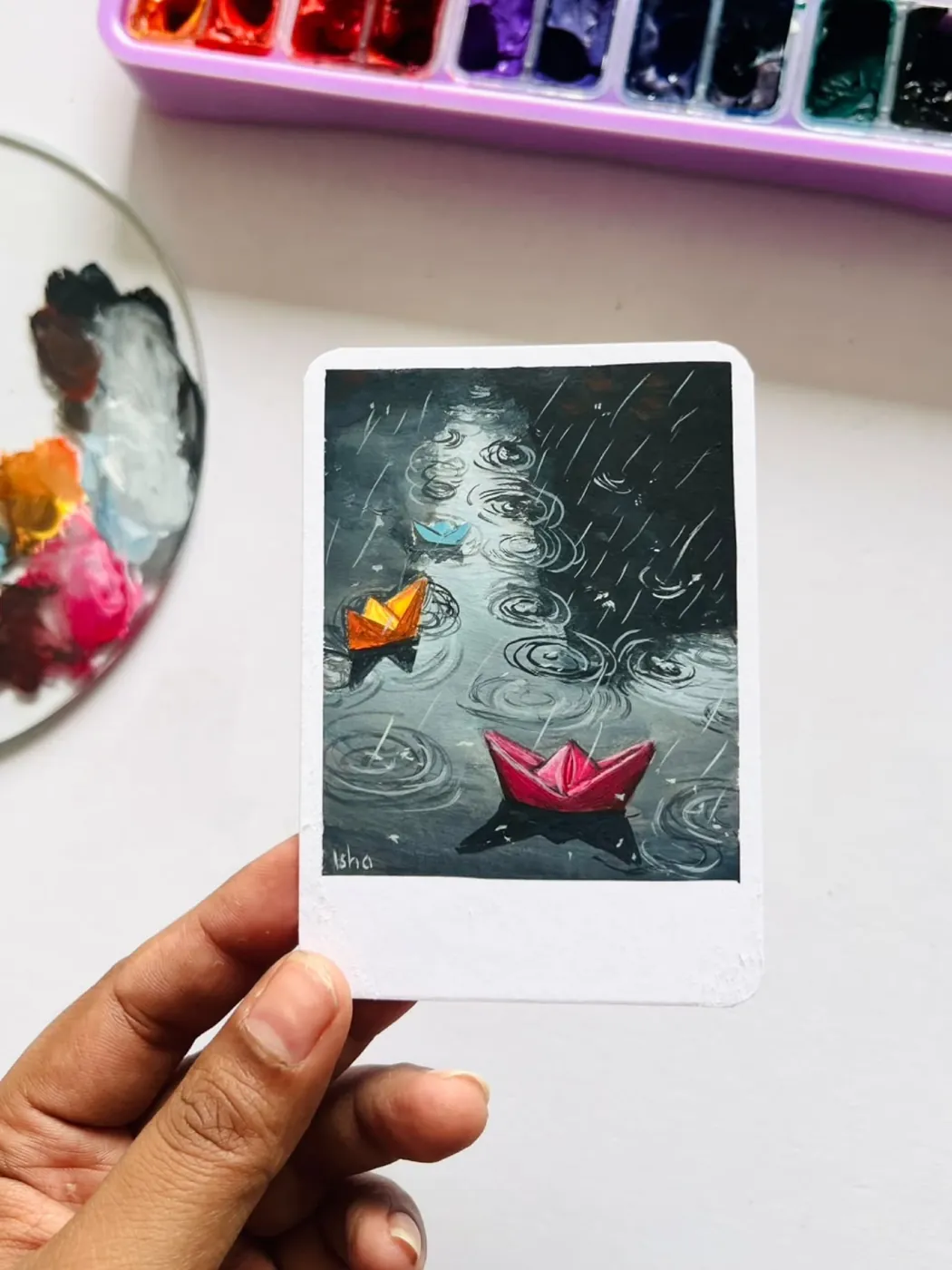
Make the decision smaller
If possible, buy or borrow a few colours rather than a large set. Paint the same simple subject twice. Notice whether you prefer preserving dry layers or reopening them, a varied surface sheen or a consistently matt one, and a rigid painting surface or a paper pad. Your response to ten minutes of actual brushwork will often be more useful than a list of abstract advantages.
Keep the test modest and label the materials you used. Let both versions dry fully before judging the colour and finish, because wet paint can look different from its dried surface. The comparison will not prove that one medium is better, but it can reveal which interruptions you enjoy solving. Some painters welcome acrylic’s firm stopping point; others value the ability to reopen a gouache passage with water.
If acrylic is the direction you choose, artist Isha Kamal’s Elysian Vibes beginner course provides a structured route through supplies, colour theory, blending, layering and guided subjects. You can also compare paper and canvas supports before shopping, or read the course-level guide if you already have some painting experience.
Explore the Acrylic Painting Beginner’s CourseCompare acrylic paper, canvas board and stretched canvasChoose between the beginner and intermediate courses
References and next steps
- Winsor & Newton: gouache and acrylic in watercolour techniques
- Winsor & Newton: why cracking occurs in gouache
For new paintings and studio updates, follow Elysian Vibes on Instagram .